

Discover “The Lost Years”: Melinda Fabian’s Collectible Paper Sculpture of an Underwater World
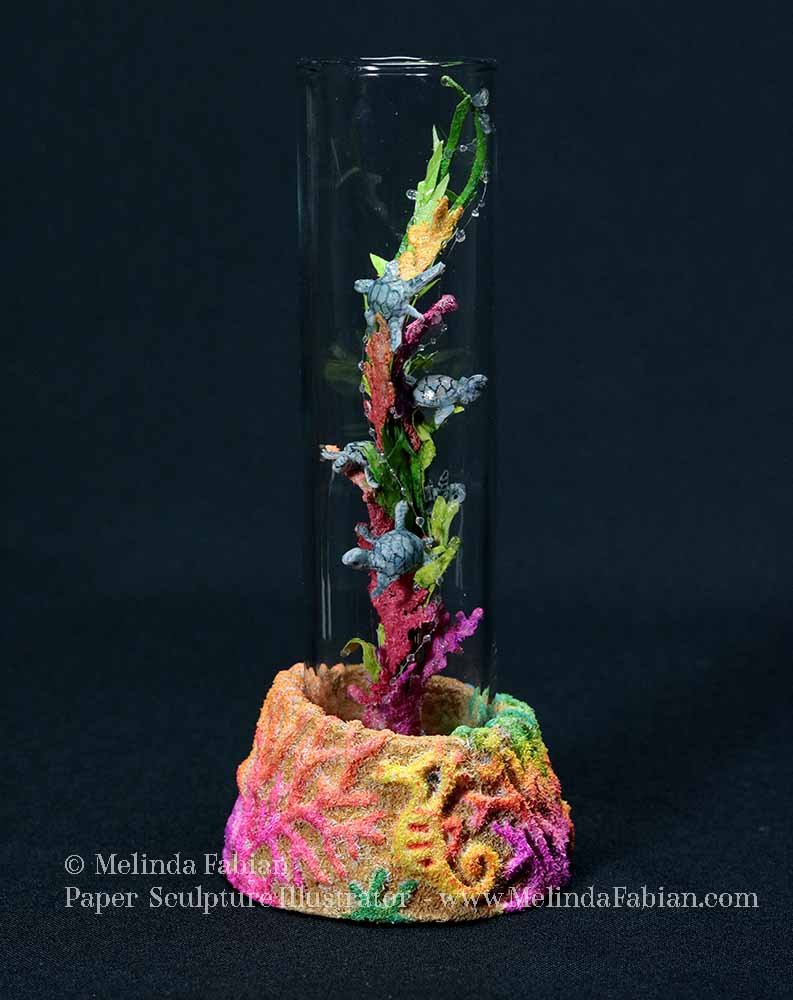
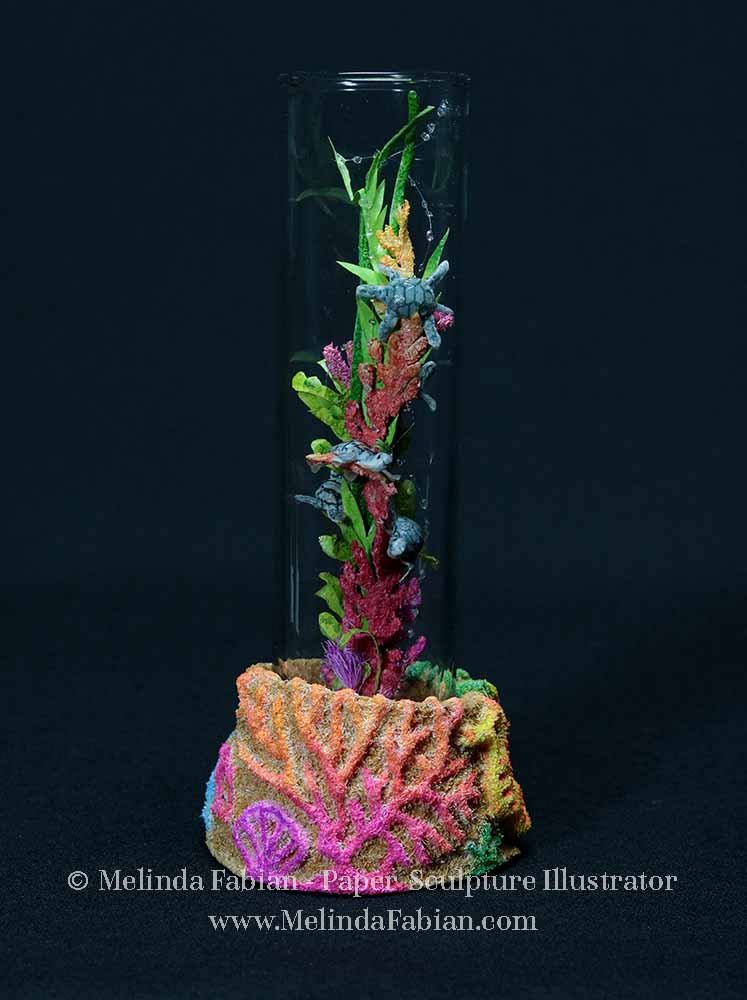
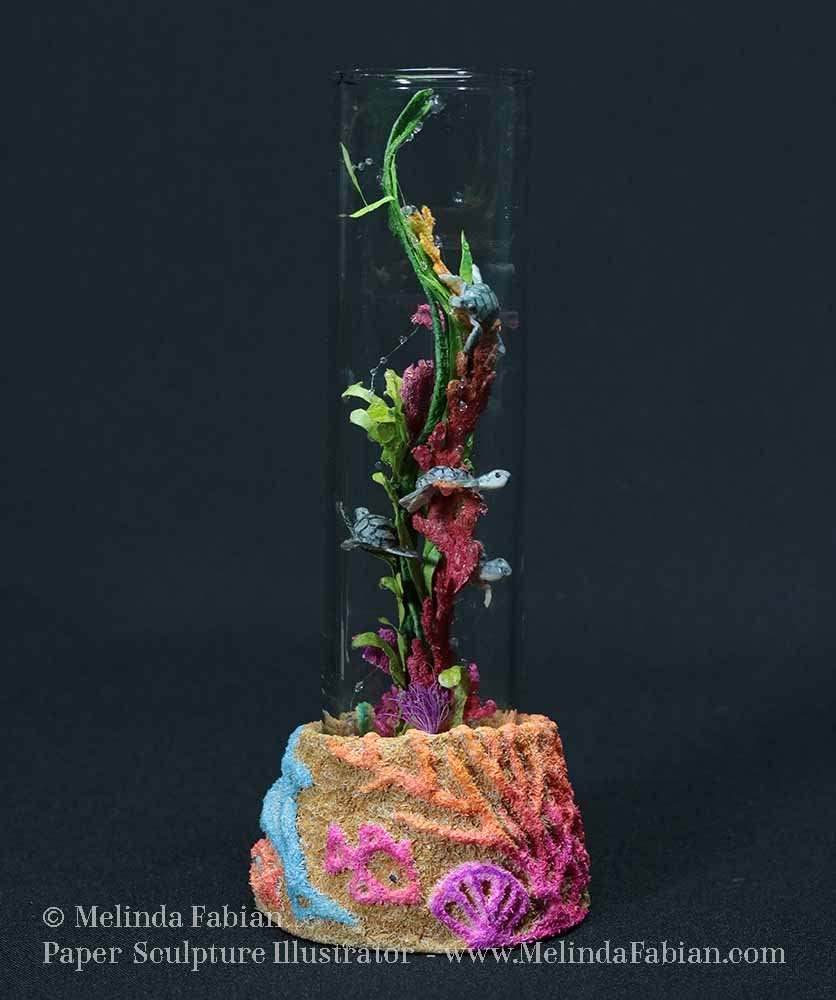
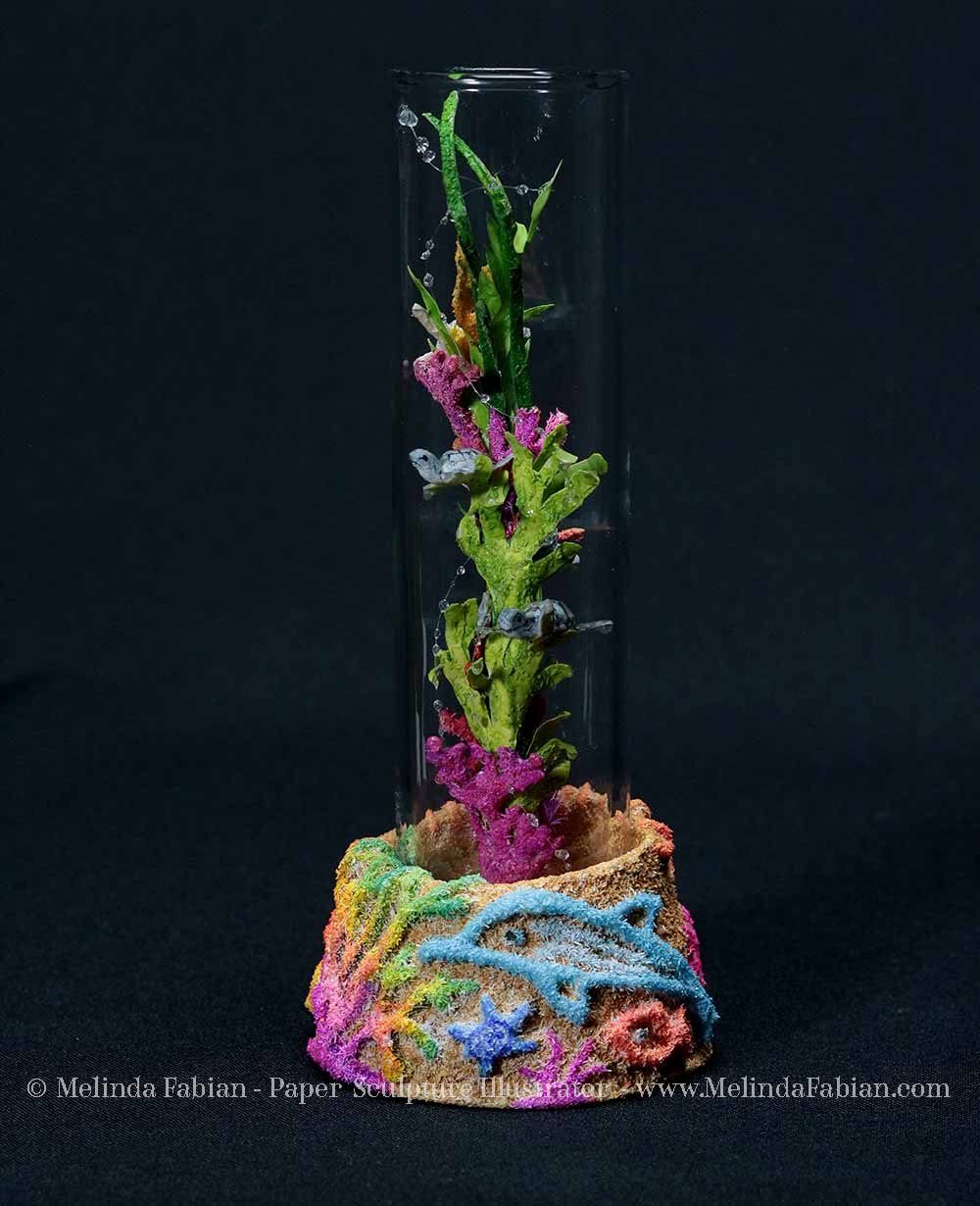
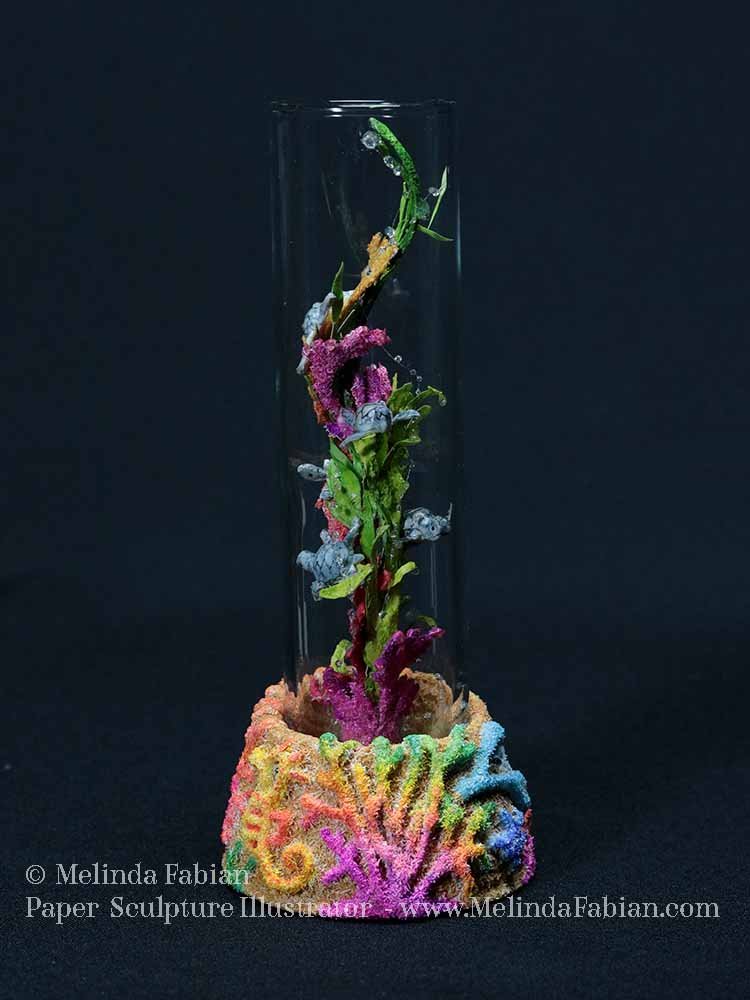
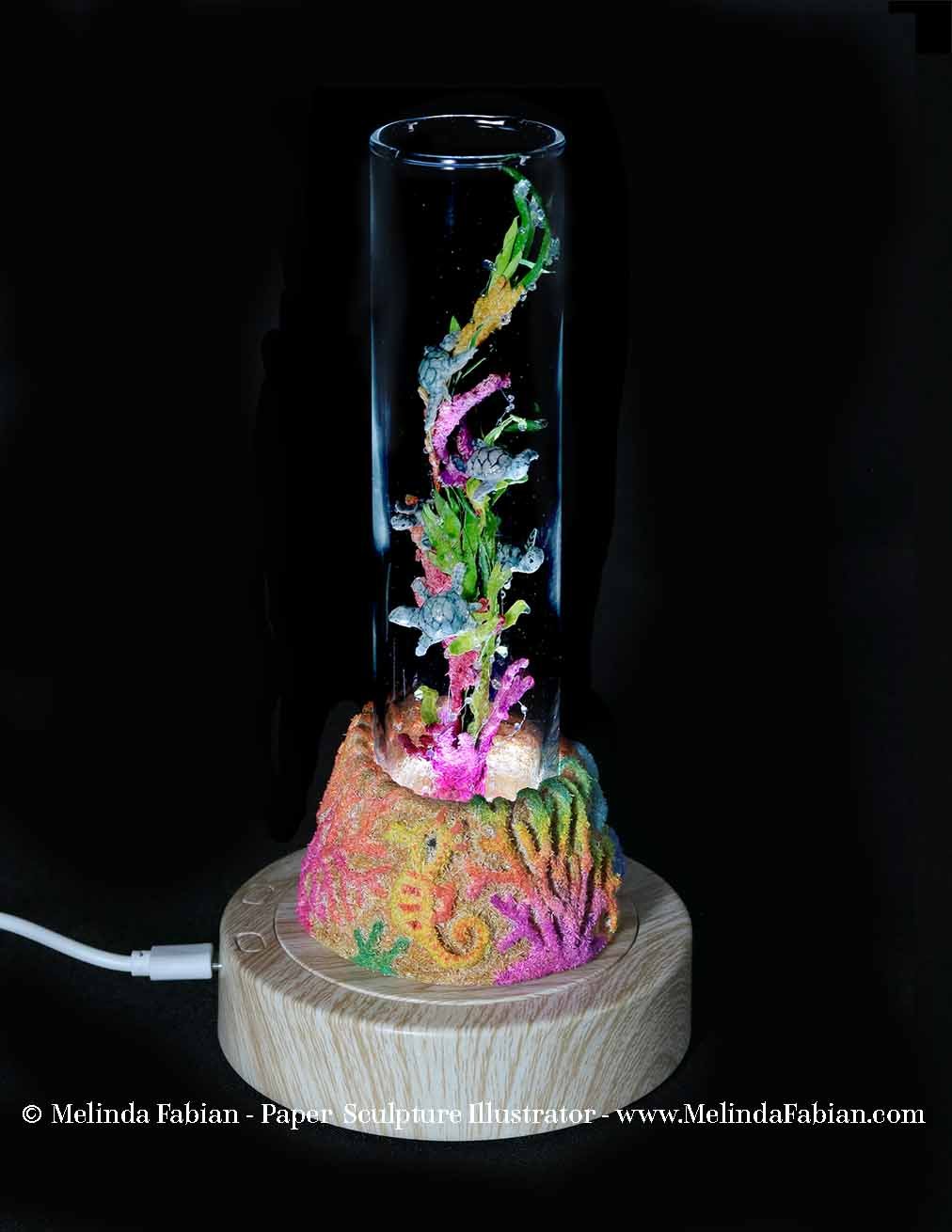
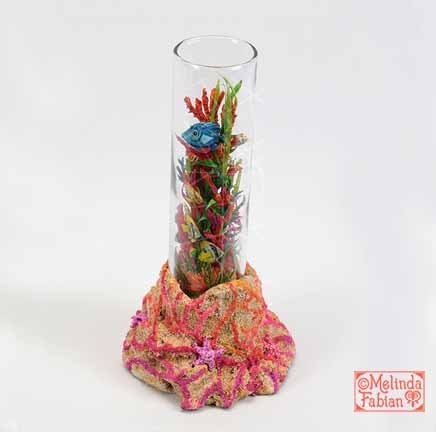
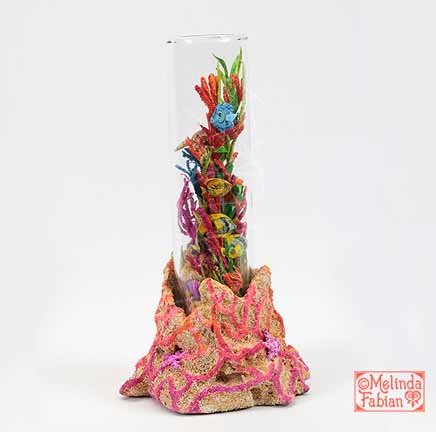
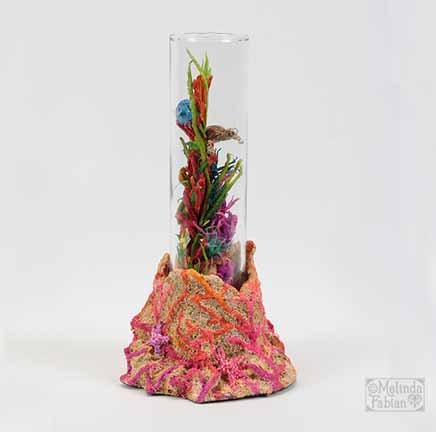
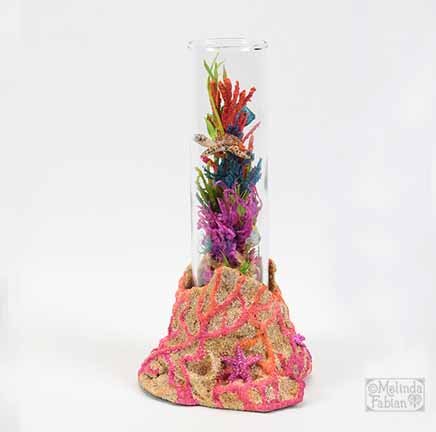
Paper sculpture of the life of young sea turtles swimming in the coral reef. These years are known as “The Lost Years’.
For collectors who are drawn to artwork that rewards close looking, Melinda Fabian’s “The Lost Years” is a captivating example of how paper can become sculpture, story, and atmosphere all at once. This three-dimensional work invites the viewer into a miniature underwater sanctuary, enclosed within a clear cylindrical vessel and alive with the color, texture, and quiet wonder of the sea.
At the base, a richly detailed coral reef unfolds in luminous shades of pink, orange, yellow, and green. Fabian’s granular textures and layered forms create the sensation of a living ocean floor—an intimate ecosystem where every surface has been considered. As the eye travels upward through the transparent vessel, delicate aquatic forms rise in rhythmic vertical movement, suggesting sea grasses, coral, and drifting marine life suspended in light.
The title, “The Lost Years,” refers to the mysterious early period in a sea turtle’s life after hatchlings reach the ocean. Scientists have long used the phrase to describe the years when young turtles largely disappear from view before returning to more familiar coastal habitats. Fabian transforms that mystery into a poetic visual narrative: a protected, hidden world where young sea turtles can grow, explore, and thrive.

What makes this piece especially compelling for fine art collectors is the fusion of technical precision and emotional accessibility. “The Lost Years” is created entirely from hand-cut, acid-free, archival papers. The sculptural details are built from painted papers, while watercolor and gouache add depth, luminosity, and painterly nuance. The result is both delicate and enduring: a work that celebrates craftsmanship while carrying a strong sense of environmental imagination.
Fabian’s strength lies in her ability to make paper feel alive. In this sculpture, the medium appears to float, sway, and breathe. The viewer is not simply observing a scene; they are entering a small, self-contained world. For a collector, that intimacy is part of the appeal. “The Lost Years” can hold attention from across a room, yet it reveals its true richness up close, where the hand of the artist becomes visible in every cut, curve, and painted detail.
The presentation enhances the experience. The sculpture may be displayed on a tabletop or with its rotating, lighted base, allowing the underwater forms to shift gently in changing illumination. The base offers color-changing light or a single-color setting, making the piece especially effective in an intimate interior, coastal home, private collection, or gallery-style display.

There is also an important conservation sensibility woven into the work. Rather than presenting the ocean as distant or abstract, Fabian gives us a tender, imaginative refuge—one that reminds us how much beauty exists beneath the surface, and how essential it is to protect fragile marine environments and the creatures that depend on them.
“The Lost Years” is the kind of artwork collectors remember: technically impressive, visually joyful, and rich with narrative. It offers the pleasure of discovery each time it is viewed, making it a distinctive addition for anyone who collects contemporary paper sculpture, nature-inspired art, or finely crafted works that combine whimsy with depth.
Artwork details: “The Lost Years” measures 4.5” x 7.5” and includes the rotating, lighted base. The glass aquarium measures 4” in diameter and 7.5” high; the rotating base measures 4.5” in diameter and 1” high. Price: $950.00.
“The Lost Years” is available for purchase at my SHOP.
If you are building a collection around nature, ocean life, paper sculpture, or works that bring a sense of wonder into the home, this piece deserves your attention.

Capturing a World of Color: A Hand-Cut Paper Sculpture for Collectors of Coastal Wonder
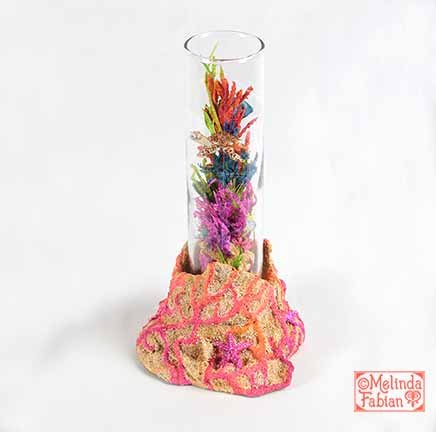
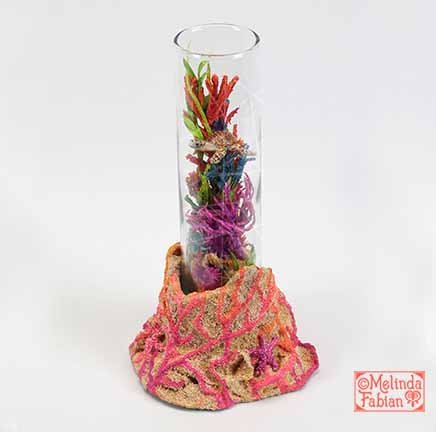
A three-dimensional artwork that seamlessly combines hand-cut paper, watercolor, and gouache to create a visually stunning piece. The artwork features a cylindrical clear glass container resting on a vibrant sculptural base with intricate textures resembling coral and exotic plant life.
Introducing “Capturing a World of Color” — an original paper sculpture for collectors drawn to wonder, craftsmanship, and the beauty of the natural world.
For the fine art collector seeking a piece that invites close looking, “Capturing a World of Color” offers an intimate, highly detailed encounter with an imagined underwater world. This three-dimensional sculpture centers on a cylindrical clear glass vessel, surrounded by a richly textured sculptural base in luminous pink, orange, and yellow hues. Organic forms reminiscent of coral, exotic marine plants, and starfish create a sense of life, movement, and discovery from every angle.
Inside the glass, layered hand-painted paper elements form a vibrant aquatic landscape of blues, reds, and greens. A sea turtle moves among the plants, adding narrative charm and a quiet focal point for the viewer. As light passes through the clear glass, the color, texture, and depth of the piece shift subtly, giving the sculpture a living quality that rewards repeated viewing.
The inspiration behind “Capturing a World of Color” comes from the extraordinary biodiversity and visual richness of underwater ecosystems. Rather than presenting a traditional aquarium, I reimagined the reef as a sculptural world contained within and extending beyond glass—an artwork that blurs the line between vessel, habitat, and dreamlike seascape.
Each element is individually hand-cut from acid-free and archival paper and meticulously painted with watercolor and gouache. The sandy beach beneath the glass is also created from finely cut paper, while the coral reef appears both inside the vessel and along the exterior base. This continuation of form gives the sculpture a cohesive composition and highlights the precision, patience, and originality behind the work.
For collectors, the appeal of “Capturing a World of Color” lies in its combination of technical delicacy, imaginative storytelling, and environmental reverence. It is a celebration of natural forms, vivid color, and the fragile wonder of aquatic life—an intimate statement piece suited for a curated collection, coastal residence, or space where art becomes a daily invitation to pause and look closer.
“Capturing a World of Color” is available to experience in person at Seaside Art Gallery in Nags Head, North Carolina, or online through Seaside Art Gallery.
Collectors interested in distinctive paper sculpture, marine-inspired artwork, or finely crafted dimensional pieces are invited to view this work while it is available.
“Capturing a World of Color”
Paper sculpture with hand-cut paper, watercolor, gouache, and glass
8” high x 4” wide
$895.00

Making a 3D Coral Seascape Come to Life With Paper
I like creating 3D under-the-sea paper sculptures because I can add a lot of different textures and vibrant colors to the scene.
I like creating 3D under-the-sea paper sculptures because I can add a lot of different textures and vibrant colors to the scene, such as my design, “Coral Reef.” I also like making the sand out of paper – keeping the entire paper sculpture authentic –100% made out of paper.
For this colorful “Coral Reef” paper sculpture, I wanted to highlight the crab and the clown fish. I also wanted to intermix flat papers with three-dimensional pieces. For instance, the magenta and light purple coral on both sides of the illustration are 3D in that they come out of the flat papered background, but, the coral is made with flat paper.
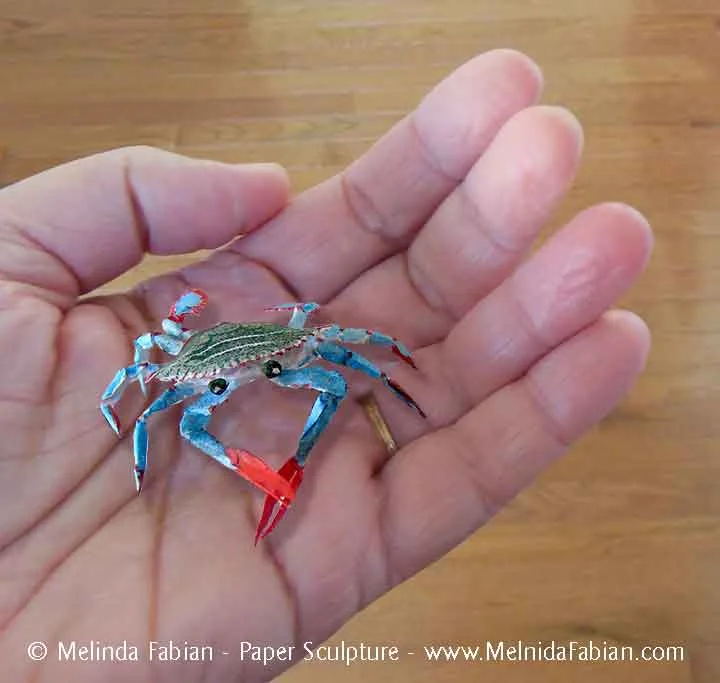
In contrast, if you look closely at the 3D paper seashell (bottom left corner) and the paper crab, they are both a completely three-dimensional object that you can hold in your hand, prior to me attaching it to my “Coral Reef” illustration. Both the crab and the seashell are not a flat piece of paper but life-like mini versions of the real thing.
Another example is the fish. The yellow fish in the middle of the “Coral Reef'“ illustration are three-dimensional — coming out of the paper, not attached to the flat background — but the fish is painted on flat paper.
In contrast to the yellow fish are the completely 3D clown fish. Each one of the orange, black and white clown fish come out of the paper as individual components of the design. Their bodies are about one-quarter of an inch in width.
Can you tell if the blue fish in the background are completely three-dimensional or if they are made using a flat piece of paper?
Using a combination of flat papers and completely three-dimensional objects creates another element of dimension, texture, variation and interest to this colorful paper-sculpted “Coral Reef.” Plus, it was so much fun to create. I look forward to making another one in the future.
The original “Coral Reef” piece has already sold, but you can purchase a notebook with the coral reef art printed on the front cover in my shop on my website here. The coral reef art is also available on a mouse pad in my shop.
